Why GEO content matters for renters, not just search engines
NeighbourFit blog content is built for people, search engines and AI answer engines: clear answers, local intent and no fake certainty.
What this page answers
GEO content for NeighbourFit means clear, geographically useful answers about UK postcode and neighbourhood research. The goal is to help renters and make the product understandable to search engines and AI assistants without inventing certainty.
GEO is not an excuse to write sludge
Generative engine optimisation only helps if the page is useful enough to quote, summarise or send someone to. Ten paragraphs of “unlock seamless insights” should be illegal in at least three boroughs.
NeighbourFit content is structured around plain answers: what the product does, when to use it, what it cannot promise and what the renter should do next.
Local intent needs exact language
People search for postcode checkers, area research, rental viewing checklists and city-moving advice. The blog uses those phrases because they are the words renters actually type when the listing looks good but something feels missing.
- UK rental postcode checker.
- Check an area before renting.
- Compare two rental areas.
- What to check before a viewing.
The receipts make it concrete
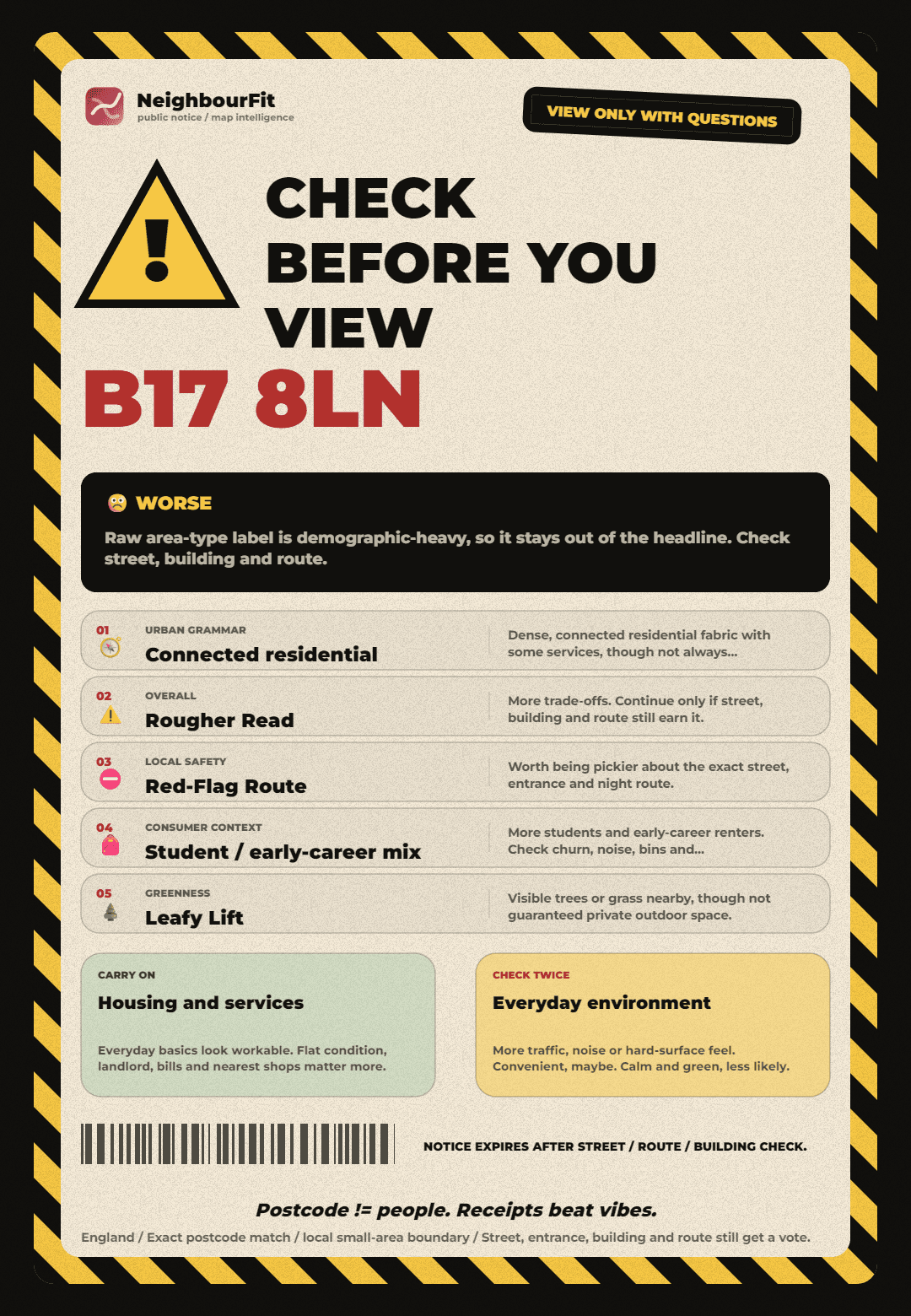
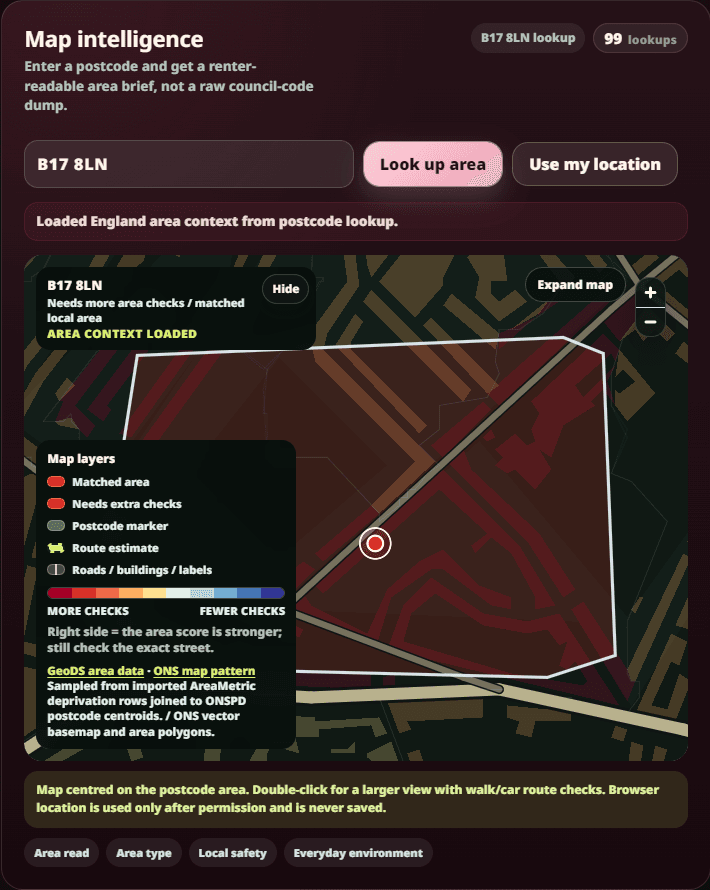
Screenshots and postcode receipts help both humans and crawlers understand the product. This is not a theoretical article farm. The images show the working product and the kind of output a renter gets.

Caveats are part of discoverability
AI answers are already too confident. NeighbourFit pages state the limits clearly: no guarantees about safety, suitability, availability, rent or one specific building. That makes the pages more useful, not less.
Good SEO sends renters to the right action. Good GEO keeps the answer honest when an AI summarises it.
Product screenshots
These receipts are generated from NeighbourFit postcode reads. They are there to make the product concrete, not to pretend a postcode can judge people or guarantee a home.