What a postcode checker can and cannot tell you
A sober guide to the limits of UK postcode checkers, and how NeighbourFit avoids fake certainty around neighbourhood data.
What this page answers
A postcode checker can summarise available postcode evidence, missing data and practical signals. It cannot guarantee safety, building quality, tenancy conditions, rent fairness, availability or personal fit.
What it can tell you
A good postcode checker can show postcode evidence from available datasets. It can organise signals, label sources and make the next check obvious.
- Wider read and what still needs checking.
- What the surrounding place seems to be like, where the data can say anything useful.
- Nearby or practical signals that should be verified.
- Questions to ask before and during the viewing.
What it cannot tell you
It cannot tell you whether one doorway is safe, whether a landlord responds, whether the flat has damp behind a wardrobe or whether your life will fit the commute after three months.
If someone sells you that certainty, they are not doing data. They are doing theatre with a chart.
Why caveats are part of the product
NeighbourFit treats caveats as a feature because UK data varies by nation, source and update cycle. Some data is broad. Some is approximate. Some is missing. Hiding that would make the interface cleaner and the decision worse.
No guarantee is more honest than a fake guarantee with nice gradients.
How to use it properly
Use the checker to shortlist, compare and ask better questions. Then verify with the viewing, official services, tenancy paperwork and the boring admin everyone tries to avoid until it becomes expensive.
Product screenshots
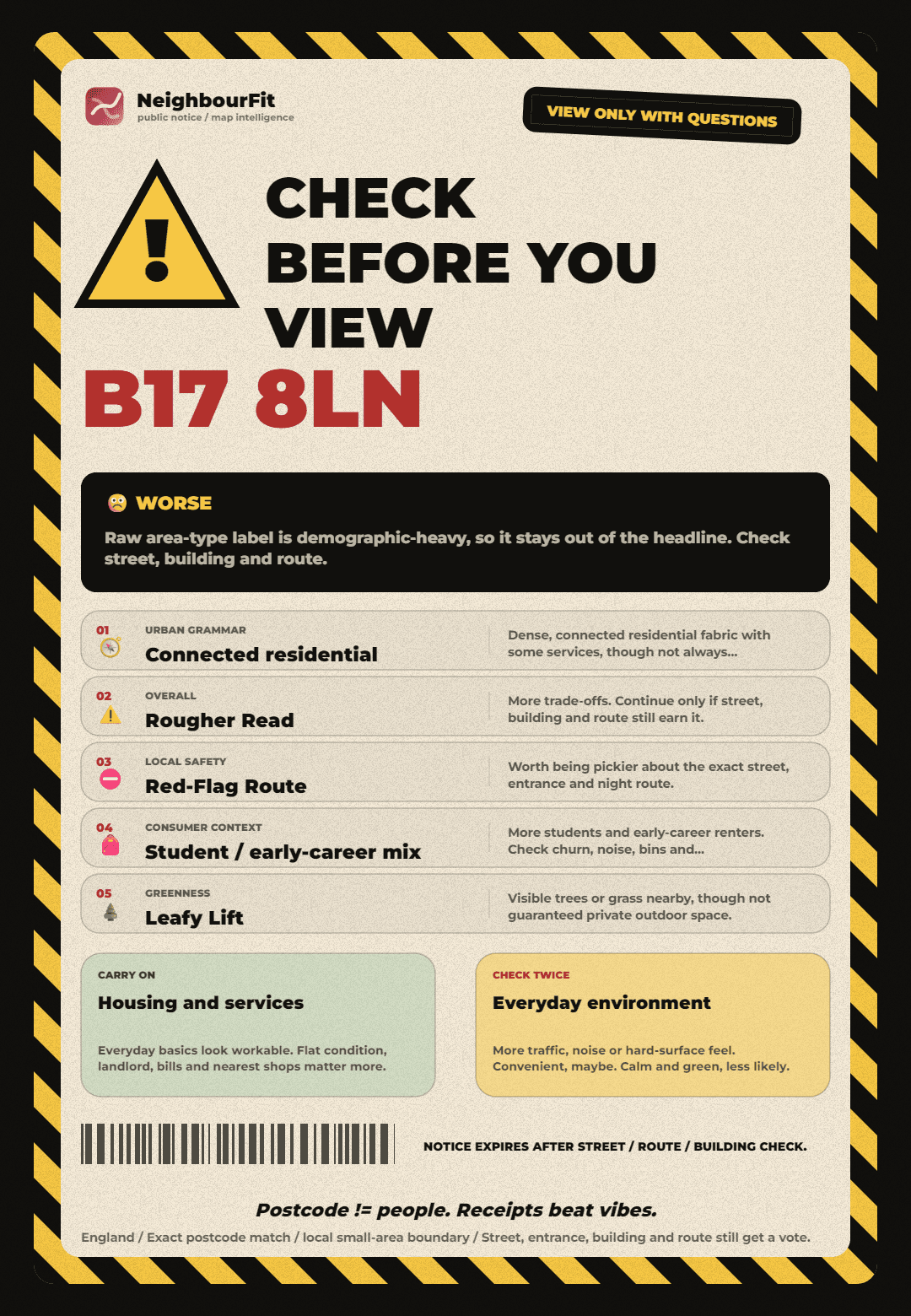
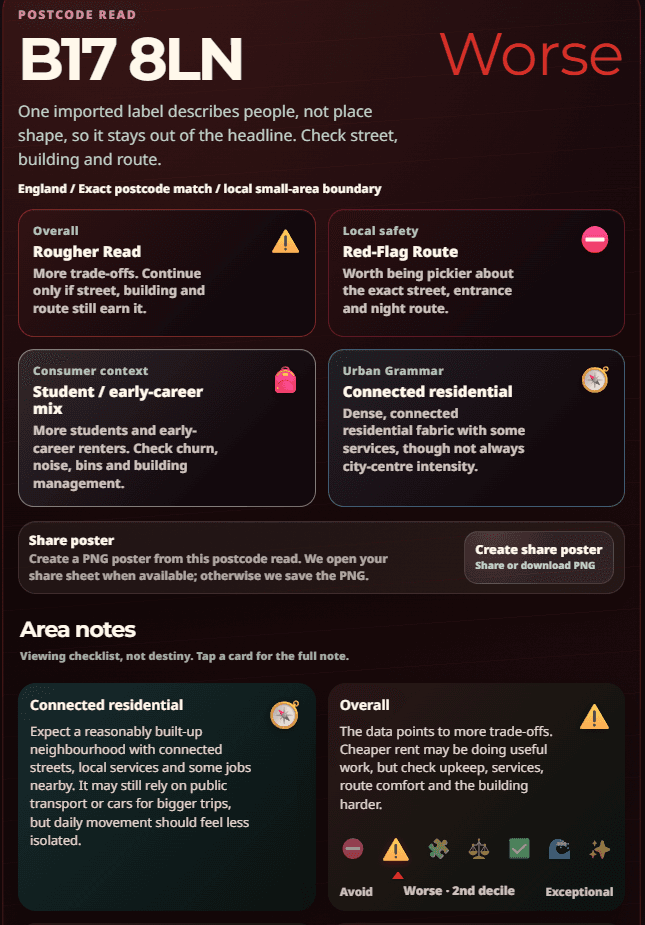
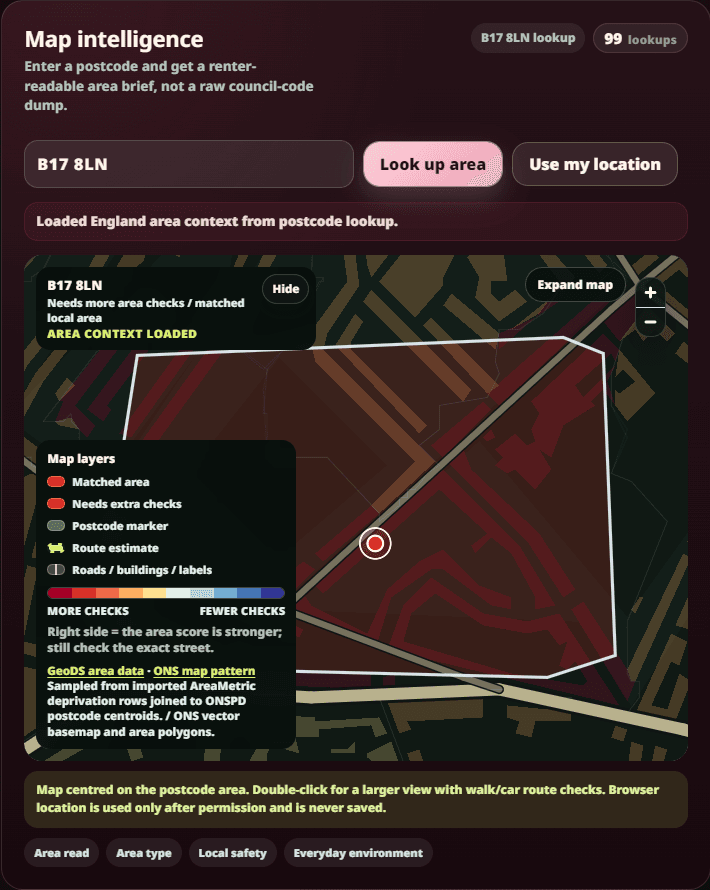
These receipts are generated from NeighbourFit postcode reads. They are there to make the product concrete, not to pretend a postcode can judge people or guarantee a home.