Using NeighbourFit to flex on your friends: my postcode is better than yours
A playful guide to sharing NeighbourFit postcode receipts with friends without turning area data into nonsense.
What this page answers
NeighbourFit receipts can be shared with friends to compare postcode context, but the joke should stay on listing theatre and wasted viewings. A postcode receipt is not a claim that one area or group of people is better than another.

The acceptable flex
You run your postcode. Your friend runs theirs. One receipt looks cleaner. Someone says “my postcode is better than yours”. Everyone laughs. Nobody becomes a local authority.
That is the lane: playful comparison, not social ranking. The receipt is a conversation starter, not a weaponised spreadsheet.
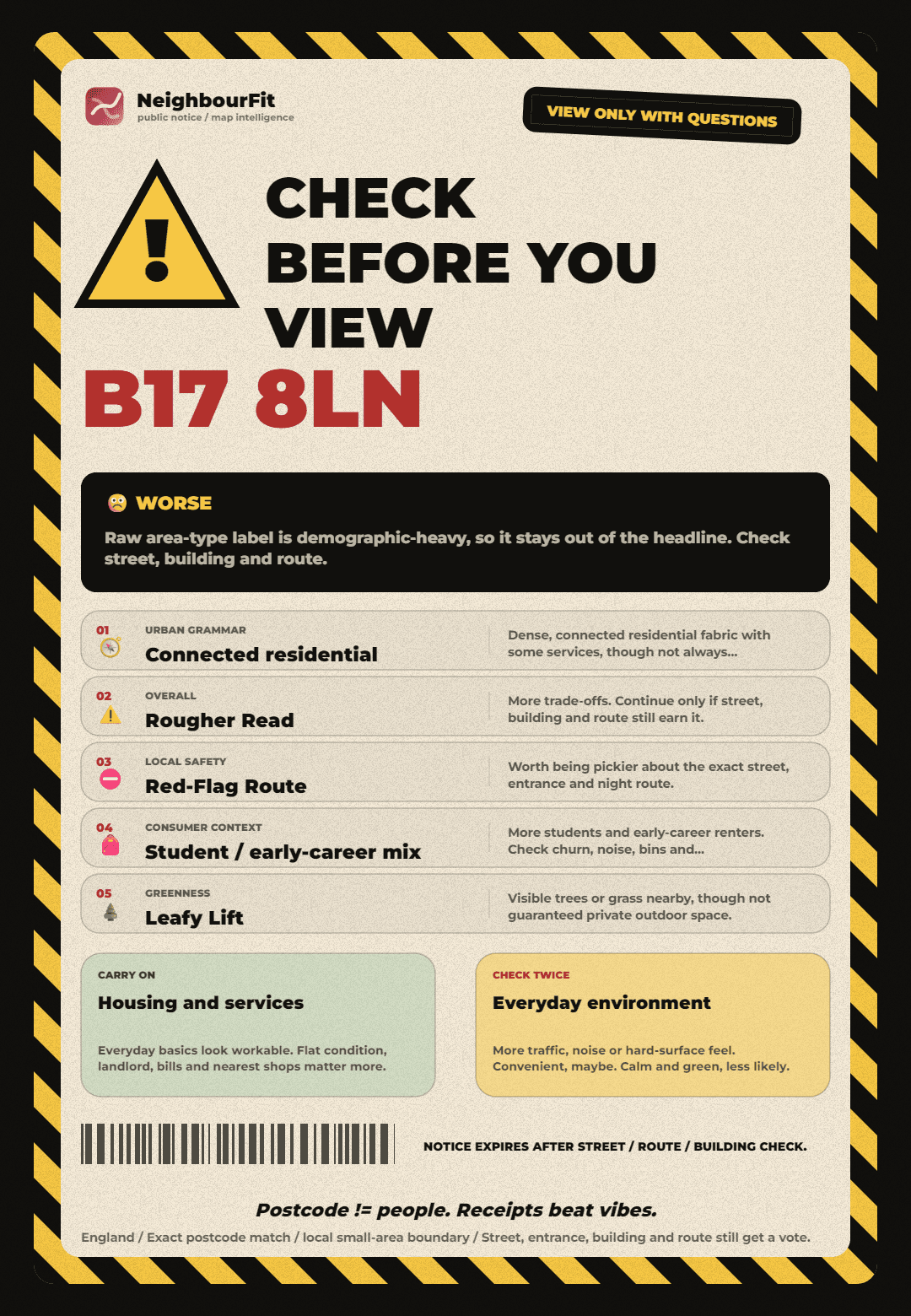
What you can compare
Compare practical signals: commute fit, wider read, route questions, green cover, missing data, noise clues and the stuff you would otherwise forget until after moving in.
- Which postcode raises fewer immediate viewing questions?
- Which one fits your routine better?
- Which one needs a harder street or building check?
What not to do
Do not use postcode evidence to dunk on people, poverty, ethnicity, students, families, migrants or anyone dealing with housing stress. That is not edgy. That is just grim with Wi-Fi.
NeighbourFit keeps the edge aimed at bad listings, vague portals and wasted viewings. Keep the group chat there.
Better postcode read? Fine. Better person? Absolutely not. Put the spreadsheet down.
Best use: decide who books the viewing first
If you and your friends are comparing homes, the receipt can help decide which viewing gets priority. The winning move is not bragging. It is avoiding the flat that looked good only because the photos lied politely.
Product screenshots
These receipts are generated from NeighbourFit postcode reads. They are there to make the product concrete, not to pretend a postcode can judge people or guarantee a home.